
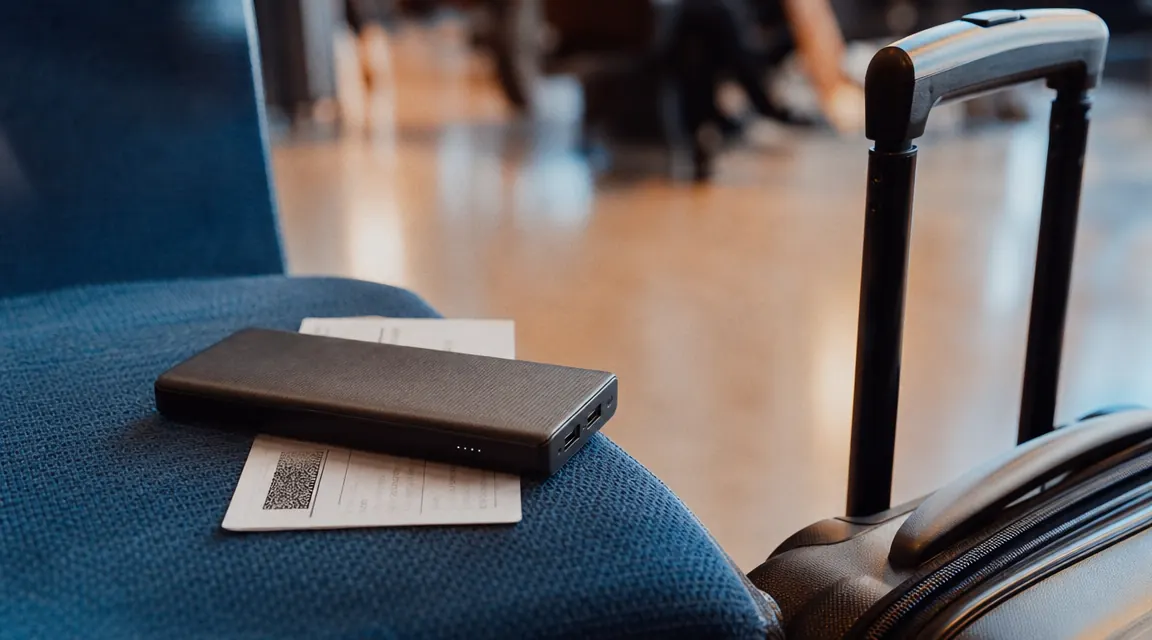
The short answer: if fast charging is your priority and you want something genuinely compact, the INIU 45W 10000mAh wins. If you need a USB-A port for older gear and don't mind a slightly bulkier form factor, the Anker 521 is a reasonable alternative. But those two sentences skip a lot of nuance that matters when you're deciding what to stuff into a carry-on hip belt at 5 a.m.
I've been flying carry-on-only for years, and I've tested a lot of power banks in real airports, not on a desk. The INIU 45W has been my daily carry for eight months. I borrowed an Anker 521 from a friend on a recent trip and ran them side by side for ten days across four cities. Here is what the numbers actually mean on the road.
| Spec | INIU 45W 10000mAh | Anker 521 PowerCore |
|---|---|---|
| Capacity | 10,000 mAh | 5,200 mAh |
| Max Output Wattage | 45W (USB-C PD) | 12W (USB-C) |
| Ports | 1x USB-C (in/out), detachable cable | 1x USB-C, 1x USB-A |
| Pass-through Charging | Yes | Yes |
| Dimensions | 4.5 x 2.8 x 0.6 in | 3.8 x 2.5 x 0.9 in |
| Weight | 7.5 oz (213 g) | 4.8 oz (136 g) |
| TSA / Airline Compliant | Yes (under 100Wh) | Yes (under 100Wh) |
| Price | Check today's price on Amazon | Check today's price on Amazon |
| Best For | Fast-charging phones and laptops on long travel days | Light travelers charging one device, prefer USB-A compatibility |
Where the INIU 45W Wins
The capacity difference is the most practical win. Ten thousand milliamp hours versus 5,200 means the INIU can charge a modern iPhone from zero to full roughly three times before it runs dry. The Anker 521 gets you about 1.5 charges. On a two-flight day with a four-hour layover, that math matters. I've had my phone at 11% at JFK with three hours to kill, and I've never wished I had less battery capacity.
The 45W USB-C power delivery is the other big differentiator. At 45W the INIU can fast-charge most current smartphones and, importantly, can push enough power to meaningfully top up a small laptop like a MacBook Air or a tablet during a long flight. The Anker 521 maxes out at 12W over USB-C, which is adequate for phones but will barely tickle a laptop. If you carry a lightweight laptop for work travel, the INIU is the only one of these two that does double duty.
Where the Anker 521 Wins
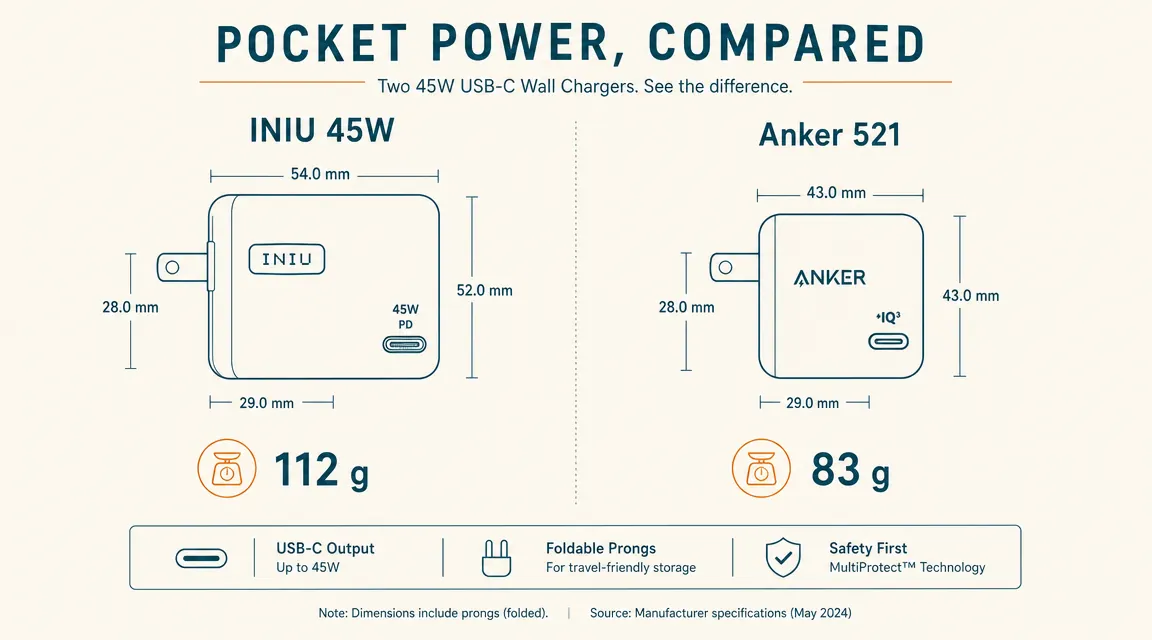
Weight and the USB-A port are the two genuine advantages. The 521 is 2.7 ounces lighter than the INIU. That gap sounds small until you're trying to hit a 7-kilogram carry-on limit at a European low-cost carrier gate. The 521 also has a USB-A port, which matters if you still use older Micro-USB accessories, a travel Bluetooth speaker, or any gear that predates the USB-C transition. The INIU is USB-C only, so older cables need an adapter.
Anker's build quality has a satisfying solidity to it, and the brand's warranty reputation is genuinely strong. The 521 also tends to stay in stock with consistent quality across batches, which is something I pay attention to on Amazon when a product has been on the market long enough to have a track record. That said, the INIU's 80,000-plus reviews put it in the same credibility tier for most shoppers.
Your phone is at 11% and your gate just changed. Pack the one that keeps up.
The INIU 45W 10000mAh has been in my carry-on for eight months straight. Fast charging, TSA-approved, and genuinely slim enough to forget it's there until you need it.
Amazon Check Today's Price on Amazon →Charging Speed in Practice
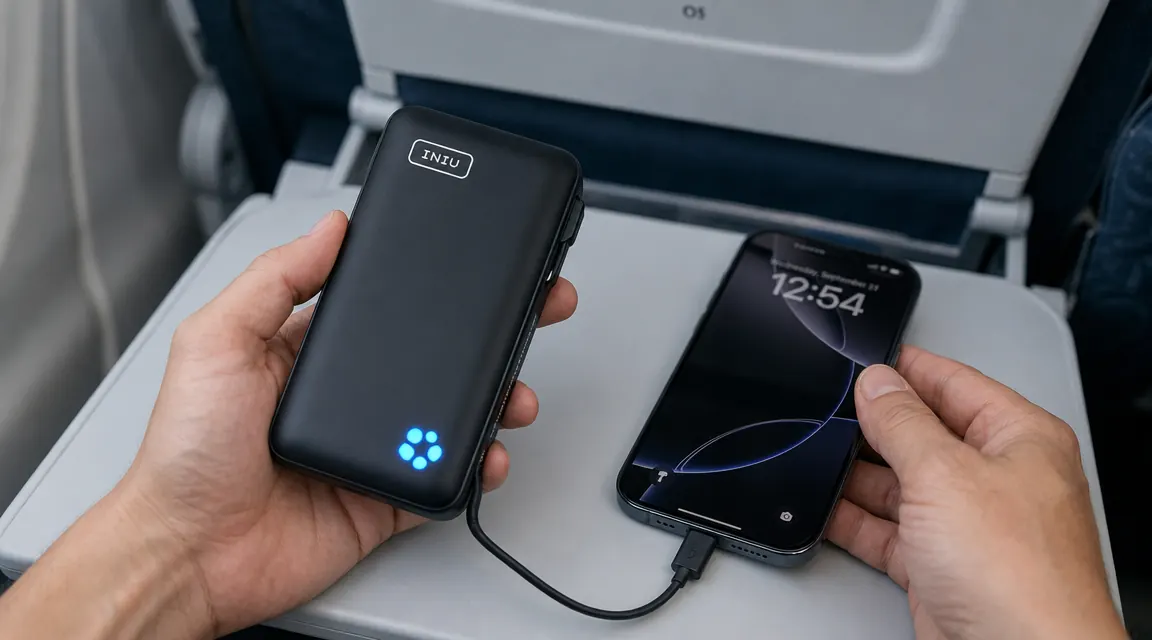
I ran a simple test on the same flight: iPhone 15 Pro, drained to 10%, plugged into each bank in turn. The INIU hit 50% in about 28 minutes using its detachable USB-C cable at close to full 45W output. The Anker 521 hit 50% in just over an hour at 12W. In practice, that difference means the INIU can give your phone a meaningful charge during a boarding delay or a short connection. The Anker tops your phone off if you leave it plugged in through a full flight.
The detachable cable on the INIU is a detail I underestimated at first. Most power banks require you to bring your own cable. The INIU has one built in that snaps off when you don't need it, reducing what you have to carry separately. It's a small thing that compounds nicely when you're trying to minimize what goes into a personal item bag.
Size and TSA Compliance
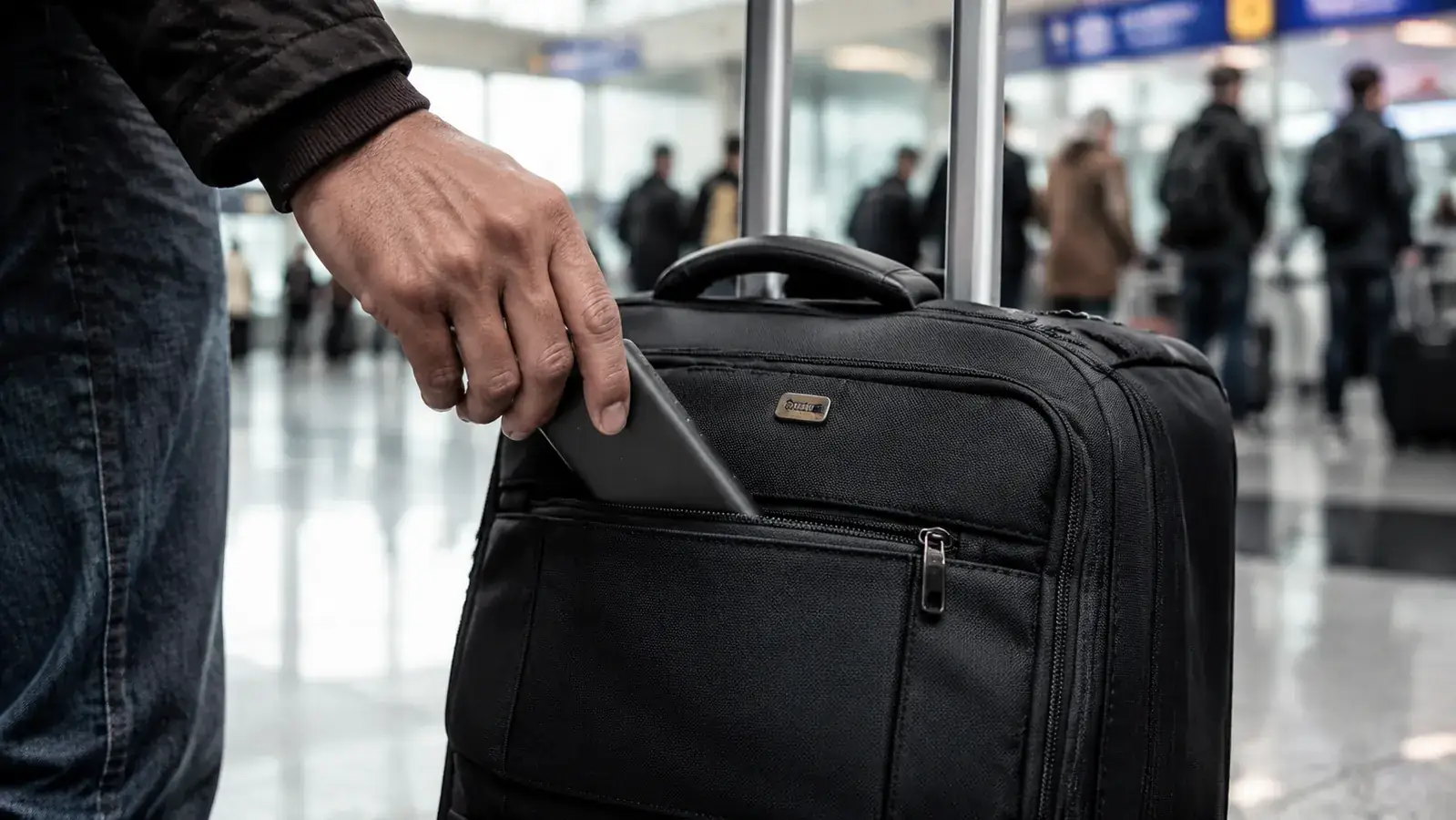
Both banks are TSA-compliant because both fall under the 100 watt-hour ceiling that airlines require for carry-on lithium batteries. You do not check either of these in your luggage. That rule applies to both, so neither has an advantage there. What does differ is the shape. The INIU is noticeably flatter and longer, while the Anker 521 is a near-cube with a bit more thickness. The INIU slips into a jacket breast pocket or a luggage sleeve more naturally. The Anker fits better in a pants pocket if you're the kind of traveler who likes to carry a small backup in your jeans.
On a two-flight day with a layover and a dead phone, you want the power bank with twice the capacity, not the one that saves you three ounces.
Value Over Time
At current prices the INIU costs a few dollars more than the Anker 521, but you are getting nearly twice the capacity and almost four times the peak charging wattage. If you travel more than a few times a year, that math resolves quickly. A single missed flight because your boarding pass app died, or a work call dropped because your phone gave out at baggage claim, costs more than the price difference between these two products combined.
Where the Anker 521 makes sense on value is for travelers who genuinely only charge one device per trip, travel light domestically, and already have a USB-A charger habit they don't want to break. For that narrow use case, paying slightly less for half the capacity is a fair trade. For most travelers, it isn't.
Who Should Buy Which
Buy the INIU 45W if: you take more than a handful of flights a year, you carry a laptop or tablet alongside your phone, you want 45W fast charging without packing a second charger, or you've ever been stuck with a dead phone in an airport and don't want to repeat it. It covers two to three full phone charges, handles laptops in a pinch, and the detachable cable means one less thing rattling around your bag.
Buy the Anker 521 if: you travel infrequently, you prioritize the lightest possible kit over capacity, or you have specific USB-A accessories you charge regularly and prefer to avoid adapters. It is a capable, well-built unit with a brand reputation that is hard to argue with. It just won't keep up on heavier travel days.
One thing I'd note for anyone who's been comparing on specs alone: the 45W number on the INIU refers to the output to a connected device. Your wall charger needs to be at least 18W to charge the bank itself at a decent rate. A standard 5W phone brick will charge it, but slowly. Keep that in mind when you're building out your charging kit.
The one I still pack every single trip, eight months later.
The INIU 45W 10000mAh is on Amazon with over 80,000 reviews and holds up to the scrutiny. If you want one power bank that handles a full travel day without babying it, this is the one.
Amazon Check Today's Price on Amazon →