
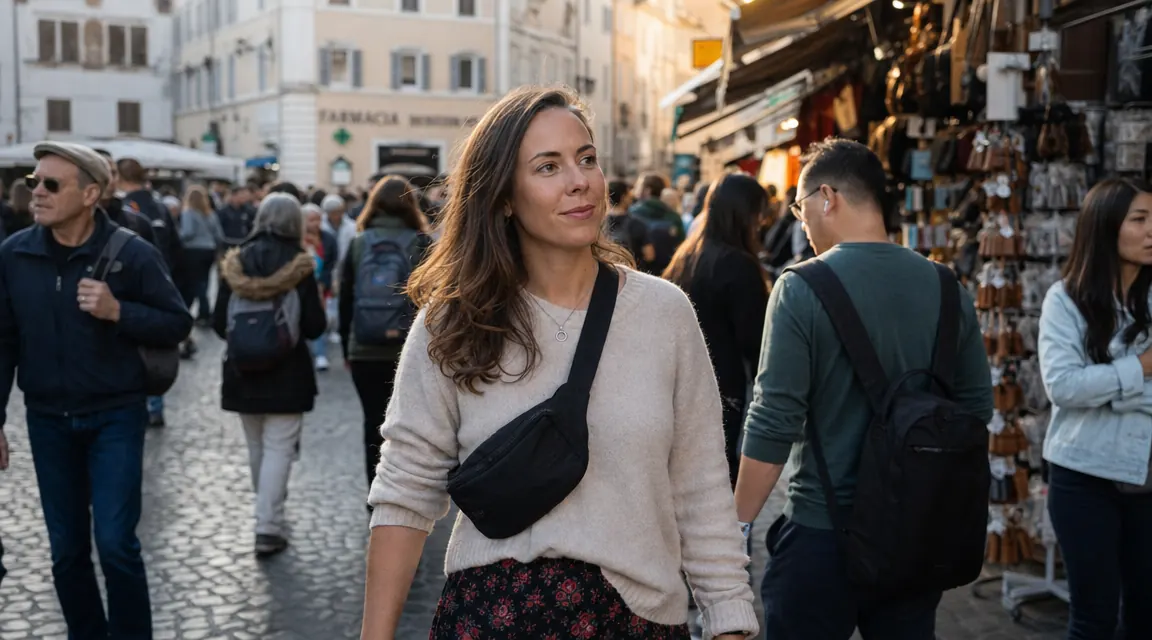
I have traveled carry-on only for nine years and visited more than 30 countries. In that time I have had my bag unzipped on a metro in Barcelona, watched someone attempt to lift a jacket off a seat in Rome, and stood in a Barcelona tapas bar while a man worked the crowd like a professional. I never lost anything. That is not luck. It is a system I built one uncomfortable lesson at a time, and the foundation of that system is choosing a bag that does not cooperate with thieves.
The problem most travelers have is that they treat security as an afterthought: they buy a regular backpack, throw on a padlock, and hope for the best. That works fine in low-risk destinations. But in busy European squares, night markets in Southeast Asia, or any crowded metro anywhere in the world, hope is not a strategy. Pickpockets are skilled at reading body language, exploiting distraction, and working in teams. The good news is that a few deliberate habits, anchored by the right bag, make you the least attractive target in any crowd.
Tired of white-knuckling your bag through crowded streets? There's a smarter way.
The WATERFLY RFID Crossbody Sling Bag puts your cards, passport, and phone behind RFID-blocking fabric and lockable zippers. Rated 4.5 stars by more than 47,000 travelers. Check today's price before this sells out in your color.
Amazon Check Today's Price on Amazon →Step 1: Choose a Bag Built to Resist Theft, Not Just Carry Things
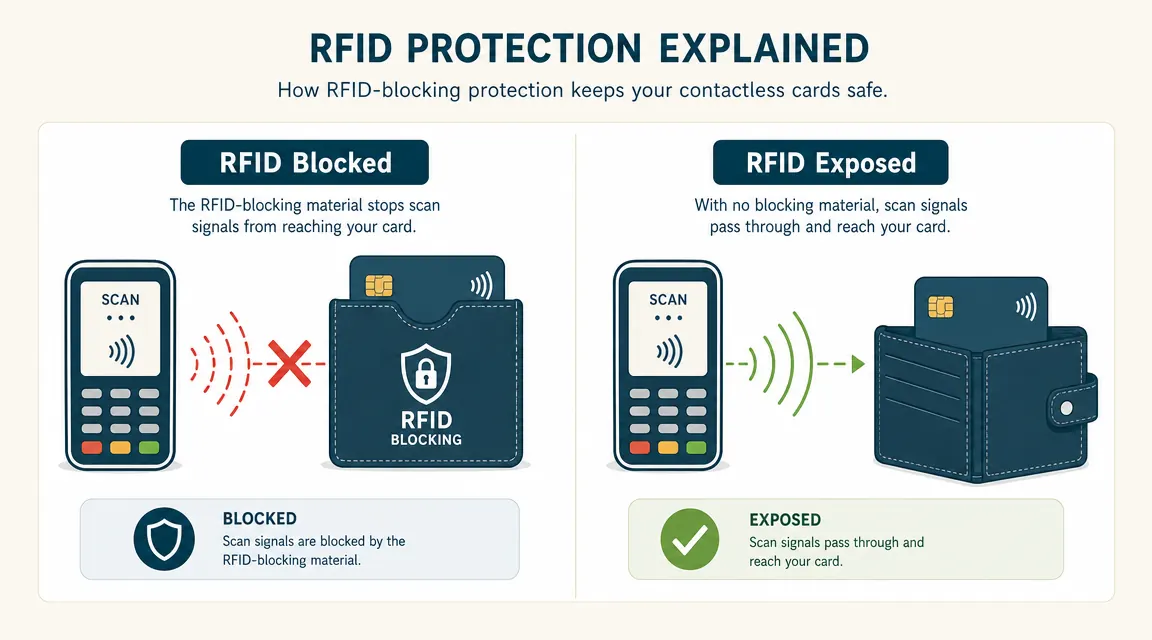
Most daypack and sling bag designs optimize for convenience, not security. Zippers face the back or sides where you cannot see them. Fabric is thin enough to slash with a knife. There is no RFID shielding, so a scanner held six inches from your bag can read a contactless credit card through the material. If you are carrying a bag like this in a high-traffic destination, you are hoping nothing happens rather than making it structurally hard for anything to happen.
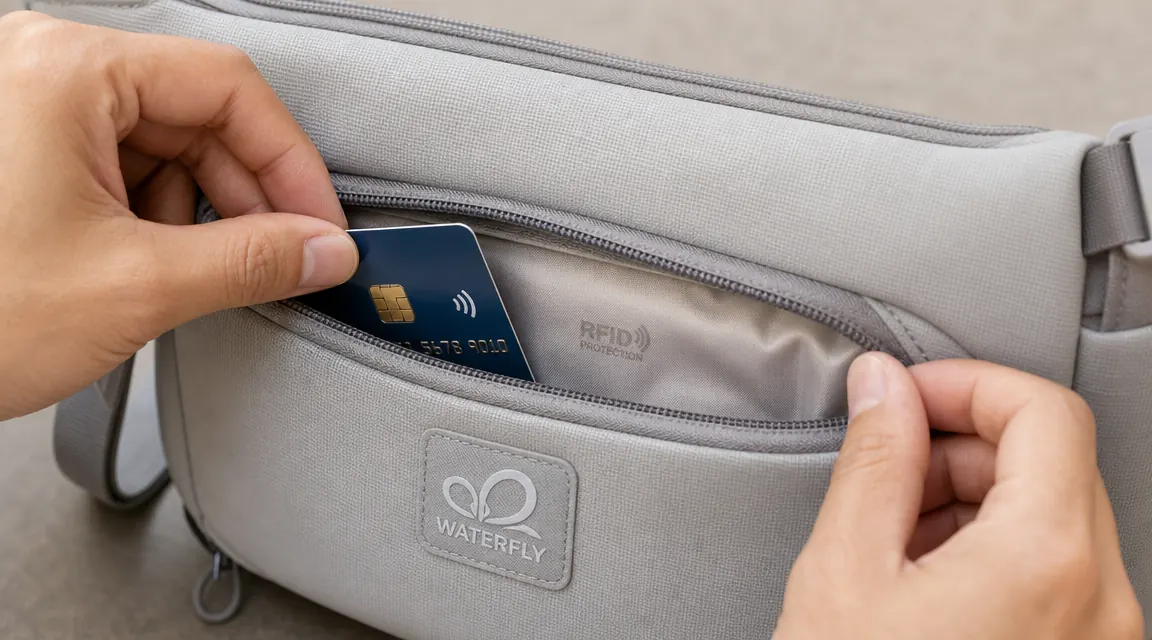
The WATERFLY RFID Crossbody Sling Bag solves three of those problems in one purchase. The dedicated RFID-blocking pocket, lined with signal-interrupting material, surrounds your cards and passport so no scanner can read them through the bag. The main compartment zipper sits on the side closest to your body when worn crossbody, not the outside. And the construction is solid enough that opportunistic slash-and-grab theft is not the easy score it would be with a thin tote or an unzipped backpack pocket. For a bag at this price point (check today's price), the security features are unusually thoughtful.
I switched to the WATERFLY after nine months of testing it across six countries, and the single biggest change I noticed was that I stopped doing the nervous hand-check every few minutes. When your bag is built to resist access, you can relax into the trip instead of guarding it. That shift in mental state is worth as much as any physical feature. For my full impressions from that nine-month trip, see my long-term review of the WATERFLY sling bag.
Step 2: Load the Bag in a Deliberate Order Before You Leave the Hotel
The RFID-blocking pocket is only useful if your contactless cards and passport are actually in it. That sounds obvious, but I have caught myself shoving everything into whatever compartment opened first when I was in a hurry to get out the door. Set a packing habit: RFID pocket gets the passport, the primary travel card, and one backup card. Everything else, including loyalty cards, transit cards, and any cash, can live in the main compartment.
Keep your phone in the top-access pocket rather than loose in a jacket, and do not keep your hotel key card next to your contactless credit cards in a standard wallet. Many hotel keys demagnetize when stored too close to bank cards, and if they are all in a random pocket rather than the dedicated RFID-blocked section, you lose the shielding benefit entirely. Two minutes of intentional loading at the start of each day saves a lot of problems at the end of it.
If you are traveling with a partner, decide in advance who carries what. One person should not carry both passports, both credit cards, and all the cash in a single bag. Distributing critical items across two people is the simplest redundancy system available, and no bag feature replaces it.
Step 3: Wear the Bag Correctly for Each Environment
A crossbody sling bag is only as secure as how you wear it. On an uncrowded street or a quiet restaurant, wearing it on your back or side is fine. But the moment you step onto a crowded metro, into a market, or through a dense tourist area, rotate the bag to the front of your body. This single habit closes off the easiest point of access: someone unzipping a compartment behind you while you watch the scenery.
The WATERFLY's strap is long enough to rotate easily between back, side, and front positions without readjusting the buckle. That flexibility matters more than it sounds. A bag that fights you every time you try to reposition it means you stop repositioning it, and that is when habits erode. The adjustment mechanism on the shoulder strap has held up through a year of this rotate-and-reset cycle with no fraying or slippage.
One more positioning note: on buses or at standing-room-only attractions, put one hand on the bag's main body rather than holding the strap. Straps can be cut. A hand on the bag body means you will feel any pressure or tugging before someone gets in. It looks casual, costs you nothing, and is one of those habits that experienced travelers develop automatically.

Step 4: Use Behavioral Awareness to Spot Setups Before They Happen
Even the best bag is not a substitute for situational awareness. Pickpockets work in teams and rely on distraction: someone drops something in front of you, someone else bumps you from behind, a third person is already into your bag. The distraction event is the signal. If anything interrupts your normal flow in a busy area, your first instinct should be to put your hand on your bag rather than respond to the distraction.
Specific environments that warrant extra attention: the exits and entrances of metro stations (especially turnstiles), escalators going up in crowded areas, the areas directly around ATMs, and anywhere a crowd has formed to watch a performance or look at something. These are the same locations that travel advisories warn about, and they are worth committing to memory before you arrive in a new city. Your hotel concierge or a local tour guide will usually tell you exactly which neighborhoods and transit lines to watch on.
The distraction event is the signal. When something interrupts your flow in a busy area, your first instinct should be to put your hand on your bag, not respond to whatever just happened.
Also notice when people get unusually close without a clear reason. Crowded metro cars require close quarters; that is normal. Someone pressing against you when there is open space nearby is not. Trust that instinct. You do not have to be rude to step back, reposition, or move to a different part of the car. The minor awkwardness of avoiding a stranger is always preferable to the hours-long ordeal of canceling cards and reporting a stolen passport.
Step 5: Set Up a Digital and Physical Backup Before You Leave Home
The best pickpocket defense also includes a recovery plan, because even careful travelers get unlucky. Before any international trip, I photograph my passport data page, both sides of every card I am carrying, and my travel insurance policy number. Those photos live in a password-protected folder in cloud storage that I can access from any device. If my bag disappears, I can pull up every document I need to cancel cards, contact the embassy, and file a police report within five minutes.
On the physical side: keep a small amount of emergency cash folded and zipped into a separate inner pocket that you do not touch during normal spending. If you ever need to use it, you will be grateful it is there. Keep one credit card in a different location from your primary travel wallet, so that a stolen bag does not leave you completely without access to funds. The WATERFLY's hidden interior zip pocket is ideal for this backup card.
Call your bank before you leave and let them know your travel dates and destinations. Banks now flag international transactions automatically, and a freeze on your card because of an "unusual" purchase in a foreign country is its own kind of disruption. A two-minute call or app notification handles it. Pair that with a card that has no foreign transaction fees and you have removed one more point of friction from the trip.
What Else Helps
An RFID sling bag is the starting point, but a few companion habits make the whole system more robust. A door alarm (about the size of a USB drive) hung from your hotel room handle alerts you if someone opens the door while you sleep, which matters more in budget guesthouses than in chain hotels. A luggage scale with a built-in lock cable lets you secure a backpack to a seat or fixed object when you step away briefly at an airport gate. Neither item takes up meaningful space in a carry-on, and both fill security gaps that a bag cannot address on its own.
If you want to go deeper on why an RFID sling bag specifically outperforms a standard daypack for city travel days, I wrote up ten concrete reasons in a separate piece. The short version: front-facing access, RFID shielding, and the ability to rotate between carry positions give you advantages that no amount of padlocks on a regular backpack can replicate. For that breakdown, see the full comparison of 10 reasons an RFID sling bag beats a regular daypack.
The WATERFLY RFID sling bag is the one piece of gear I would not travel without in any crowded city.
RFID-blocking pocket for cards and passport. Zippers positioned against your body. 4.5 stars from 47,000-plus travelers. Lightweight enough to forget you're wearing it, secure enough to stop worrying. Check today's price on Amazon.
Amazon Check Today's Price on Amazon →